





Case Studies and Technical Articles
How have other companies — including Fortune 500 brands — used Rotex Group industrial screeners?
Frac Sand Separators: Efficient Oil & Gas Solutions in Saudi Arabia

Rotex Group’s Rob Scheper, VP of Global Sales and Marketing, interviewed for Global Business Reports’ Saudi Arabia Mining and Minerals 2026.
Quick Insights: Optimizing Frac Sand Processing
- Precision Frac Sand Separators: Learn how high-performance screening enables the precisely sized proppants required for Saudi Arabia’s massive unconventional gas projects, like the Jafurah field.
- Dry Screening Efficiency: Discover how Rotex equipment eliminates the need for water-intensive washing and drying, significantly reducing energy consumption and operational costs in arid environments.
- Integrated Sand Traps and Interceptors: Understand the critical role of advanced oil and gas sand traps in protecting downstream equipment from erosion and minimizing costly maintenance downtime.
- Vision 2030 Alignment: Explore Rotex Group’s strategic expansion in Jubail, focusing on local manufacturing and “Saudization” to enhance regional supply chain resilience.
- Rob Scheper, Rotex Group VP of Globals Sales and Marketing, recently contributed an interview to Global Business Reports’ Saudi Arabia Mining and Metals 2026 report.
As Saudi Arabia accelerates its journey toward energy diversification under Vision 2030, the Kingdom’s unconventional gas reserves—led by the massive Jafurah field—have become a global focal point. Extracting these resources requires more than just traditional drilling; it demands high-performance frac sand separators capable of delivering precision-sized proppants at scale.
In a recent interview, Rob Scheper, VP of Global Sales and Marketing at Rotex Group, highlighted how the company is meeting this demand through its dedicated service and testing facility in Jubail. By focusing on efficient oil and gas solutions tailored for the Middle East, Rotex is helping operators navigate the complexities of local sand refinement. However, producing high-quality proppant in an arid environment presents significant hurdles. From extreme temperatures to the high costs of water-intensive processing, the industry faces a critical need for innovation. Understanding these challenges is the first step toward optimizing production and protecting vital infrastructure.
The Challenges of Proppant Quality: Why Standard Sand Traps are Not Enough
In the high-stakes environment of Saudi Arabia’s unconventional gas fields, the “problem” isn’t just finding sand—it’s refining it. Traditional oil and gas sand traps and basic sand interceptors often struggle with the sheer volume and precision required for modern hydraulic fracturing. When proppant isn’t sized perfectly, it leads to “near-wellbore” screen-outs, reducing the overall efficiency of the stimulation.
Furthermore, the environmental cost of traditional processing is a major hurdle. Conventional refinement relies heavily on “wet” processing, using massive amounts of water to wash away fines. In an arid region, this creates a secondary crisis: the need for intensive water sourcing and energy-heavy drying stages.
Without an advanced frac sand separator, operators face three primary risks:
- Equipment Erosion: Inefficient sand interceptors allow “out-of-spec” fines to pass through, causing rapid wear on high-pressure pumps and valves.
- High Operational Costs: The energy required to dry wet-processed sand can erase the profit margins of a well.
- Production Delays: Frequent maintenance on undersized sand traps leads to significant non-productive time (NPT).
As Rob Scheper noted, the industry needs a shift toward high-capacity, dry separation technology that protects infrastructure while conserving the Kingdom’s most precious resource: water.

Gyratory Reciprocating Motion
The Rotex Solution: Precision Frac Sand Separators and Dry Screening Technology
To overcome the challenges of arid-climate processing, the Rotex Group has engineered a high-performance frac sand separator that redefines industry standards. Unlike traditional “wet” systems that rely on water-intensive washing, Rotex technology focuses on high-frequency, precision “dry” screening. This approach is a game-changer for Saudi Arabia’s unconventional gas sector, where water conservation and energy efficiency are top operational priorities.
High-Volume Precision for Unconventional Gas
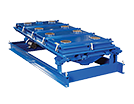
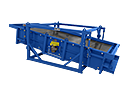
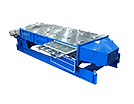
As Rob Scheper noted, the Jafurah field and other regional projects demand massive volumes of precisely sized proppants. Rotex equipment utilizes a unique gyratory reciprocating motion that keeps the sand in constant contact with the screen surface. This ensures that every grain meets the strict mesh specifications required for hydraulic fracturing, effectively acting as an advanced sand interceptor that removes unwanted fines without the need for water.
The “Dry” Advantage: Eliminating the Wash-and-Dry Cycle
The most significant value proposition for regional operators is the elimination of the drying stage. By using a specialized frac sand separator designed for dry applications, plants can:
- Reduce Water Consumption: Rotex Group equipment can help contribute to saving millions of gallons of water per year, aligning with Vision 2030 sustainability goals.
- Lower Energy Costs: Skip the expensive natural gas or electric drying phase required after wet washing.
- Optimize Footprint: Smaller plant footprints are possible when bulky dewatering and drying equipment are removed from the workflow.
Durability in Extreme Environments
These oil and gas sand separators are not just efficient; they are “desert-hardened.” Designed to operate without the protection of a building, Rotex units handle the extreme temperatures and dust of the Middle East with ease. By integrating these units as the primary sand trap in oil and gas refinement lines, operators ensure a high-quality finished product with a minimal environmental footprint.
Vision 2030 and Beyond: Rotex’s Regional Commitment in Jubail
The shift toward unconventional gas is more than an engineering challenge; it is a cornerstone of Saudi Arabia’s Vision 2030. By localizing the supply chain for critical oil and gas sand separators, Rotex Group is directly contributing to the Kingdom’s goals of energy diversification and industrial “Saudization.”
A Hub for Local Innovation
Central to this strategy is the Rotex service and stocking facility in Jubail. This hub ensures that regional operators have immediate access to OEM parts and expert service engineers, drastically reducing the lead times typically associated with importing high-performance frac sand separators.
On-Site Testing and Customization
As Rob Scheper emphasized, Rotex has enhanced its regional capabilities by deploying a dedicated test lab machine in Jubail. This allows for:
- On-Site Material Testing: Moving equipment directly to the customer’s site to verify the efficiency of dry screening on specific local sand deposits.
- Local Manufacturing: Exploring initiatives to produce filtration units and sand interceptors within the Kingdom, reducing the carbon footprint of international logistics.
- Complete Plant Solutions: Transitioning from a component supplier to a partner that designs and delivers full-scale sand trap and processing solutions.
In 2026, Rotex aims to provide a “fully Saudi” content solution for the mining and mineral sectors. This commitment ensures that as the Jafurah field and other unconventional reserves expand, the technology driving them is as resilient and sustainable as the Vision 2030 framework itself.
To learn more about Rotex Group’s frac sand separators, click here to download our frac sand application bulletin in a new browser tab. To contact Rotex Group’s Jubail-based representative, Ahmed Abdelrahim, call +966 50 349 4935 or email [email protected].